


Live Dealer Gaming Breaks Records This Holiday Season on Mobile

Recommended casinos
The 2025 holiday season has delivered a clear message to the online casino industry. Live dealer gaming is no longer a rising trend. It has become a central pillar of digital entertainment and is now the primary driver of player activity in December. Early data for the month reveals one of the strongest starts to a holiday period since industry tracking began, and the pattern behind the growth is unmistakable. Traffic is steadier than in previous years, engagement is deeper, and mobile usage is no longer just a majority. It is the default access mode.
Across the leading live dealer titles, early December produced approximately 1.61 million Average Daily Players, around 65,000 Average Hourly Players, and more than 15 million Aggregated Player interactions. These figures are significant in their own right, but their real importance lies in how they relate to one another. Daily numbers show a large and stable audience. Hourly numbers reveal uninterrupted demand throughout the day. Aggregated interactions confirm that players are returning multiple times, often within short windows. Together, these indicators describe a holiday period shaped by mobile behavior, game show formats, and a maturing global live casino audience.
This report examines what the data reveals about player habits, which titles and suppliers dominate the surge, why mobile continues to reshape the landscape, and how operators should approach the remainder of the holiday season.
What the December Data Reveals About Modern Live Dealer Demand
The early December numbers form a coherent picture of how players now interact with live casino entertainment. The surge is large, but what stands out is its consistency. Instead of sharp spikes confined to weekends, the pattern resembles steady daily viewing across morning, evening, and late-night windows. This stability indicates that live dealer products have moved beyond novelty appeal. They now serve as a reliable anchor for user activity, akin to established entertainment formats in streaming media.

This chart compares three core metrics: Average Daily Players (1.61M), Average Hourly Players (65K), and Aggregated Players (15.1M). The relationship between these values shows how consistently players engage with live dealer content during the early holiday period.
Daily Players: A Stable and Predictable Audience
Daily traffic for the first ten days of December consistently exceeded 1.6 million players across the primary live dealer titles. This sets a stronger baseline than previous years and marks a shift in user intent. Players are not sampling games at random. They are returning to specific titles out of preference and habit. That level of consistency normally appears only in mature entertainment formats, not in traditionally volatile gambling categories.
Hourly Players: High Concurrency Without Instability
The average of 65,000 hourly players reflects real-time demand that operators must continuously serve. Historically, December has seen unstable concurrency due to sharp surges during peak hours. This year, concurrency levels remain firm across the entire period. The stability suggests that improvements in mobile streaming, adaptive bitrate delivery, and expanded live studio capacity are allowing operators to absorb increased load without noticeable strain. In practical terms, this creates a smoother holiday experience for users and encourages longer return cycles.
Aggregated Players: Evidence of High-Frequency Mobile Behavior
Aggregated interactions above 15 million reveal a deeper layer of engagement that daily numbers alone cannot show. Players are logging in multiple times per day. Morning sessions, short check-ins during breaks, and extended evening sessions all stack together. This pattern reflects the influence of mobile behavior. Users access content in short bursts, return quickly, and revisit familiar experiences. The holiday period amplifies this trend as routine schedules loosen and mobile devices become the primary gateway for entertainment.
The Live Dealer Titles Shaping the Holiday Surge
The December surge is highly concentrated around a set of well-established live dealer titles. These games combine high production value, structured pacing, and interactive elements to keep players engaged for longer. Evolution leads the list by a significant margin, supported by Pragmatic Play’s growing presence in show-style formats.
| Rank | Game | Supplier | Average Daily Players | Engagement Style |
| 1 | Crazy Time Live | Evolution | 267,122 | Multi-stage game show with high stimulus |
| 2 | Monopoly Big Baller | Evolution | 138,692 | Branded draw-based show with strong pacing |
| 3 | Funky Time | Evolution | 128,349 | Music-driven visual game show with energetic rounds |
| 4 | Crazy Time Lobby 2 | Evolution | 74,395 | Alternative entry hub supporting the main title |
| 5 | Mega Wheel Live | Pragmatic Play | 73,125 | Accessible wheel show with broad market appeal |
This table lists the top five live dealer titles, along with their average daily players and defining engagement traits.
What makes these titles dominant is not chance. Game show formats draw from mainstream entertainment traditions. They offer recognisable rhythm, visual cues, and predictable moments of heightened anticipation. Players know exactly when the action builds, how bonus rounds unfold, and when the next stage of excitement arrives. This familiarity encourages return visits, especially during holiday periods when users seek experiences that are lively but effortless.
Evolution, in particular, benefits from a combination of creative leadership and operational scale. Its global studio network allows it to maintain consistent stream quality and minimize latency even during high-stress periods. Pragmatic Play’s Mega Wheel Live illustrates how accessible wheel-based formats can attract a wide audience, especially among users entering live dealer content for the first time.
These titles do not simply retain attention. They guide players into routines. Once a user builds a relationship with a game, the likelihood of switching decreases sharply. This is one of the key drivers of the concentrated traffic in December.
The Mobile Effect: The Foundation of the 2025 Holiday Surge
The most decisive factor behind the December surge is mobile adoption. Mobile devices are not only responsible for the majority of live dealer sessions. They shape the type of content players choose, the frequency of their visits, and the ease with which they re-enter familiar games.
Connectivity has played a central role. With 5G now covering roughly 60 percent of the global population, streaming stability has improved significantly. Latency is lower, resolution is higher, and the user experience is more consistent. These conditions allow live dealer games to reach a level of quality that would have been impossible only a few years ago.

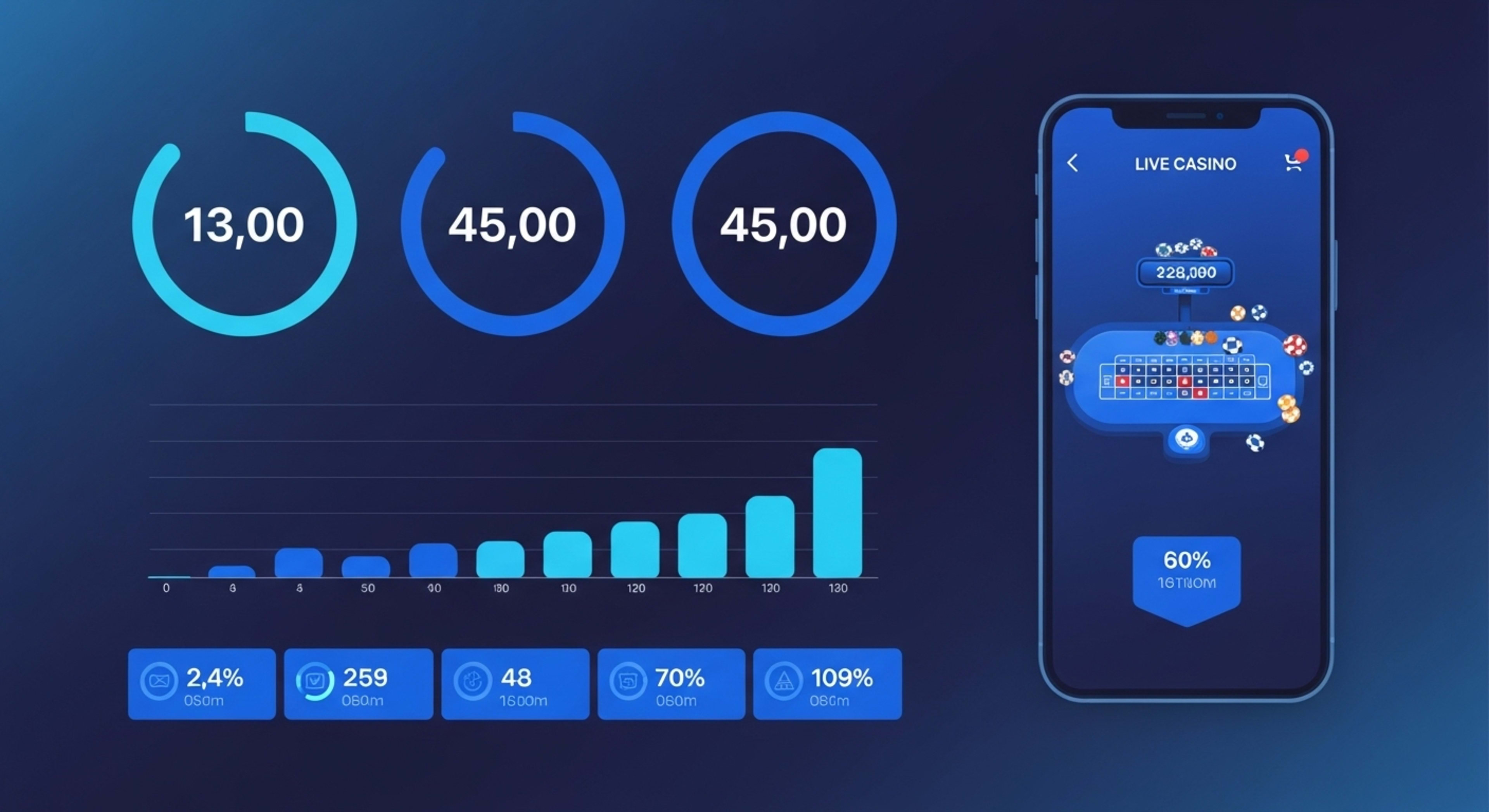
This visual summarizes the technological and demographic forces driving the rise in mobile live dealer engagement, including 5G adoption, longer session durations, improved smartphone specifications, and younger players’ strong mobile preferences.
Hardware advances have further supported this shift. The majority of 2024 and 2025 smartphones now ship with HDR video capability and higher refresh rates. Live dealer studios actively design their visual environments to leverage these features. This makes the games more aesthetically appealing on mobile screens than on many desktop monitors.
Demographics have accelerated the transition even more. Younger players prefer quick access, short sessions, and interactive social environments. Live dealer studios naturally meet these expectations. Mobile players can join and rejoin sessions instantly, a pattern that drives higher aggregated interaction counts and reinforces the strength of the mobile-first holiday surge.
Aggregated Player Behavior: The Defining Holiday Indicator
Aggregated player sessions reveal the most significant behavioral shift of the 2025 season. Instead of spreading activity across many titles, players concentrate their time in a narrow set of familiar games and revisit them frequently. This behaviour is not accidental. It is a function of mobile UX, predictive engagement loops, and the immediate availability of live content.
Players no longer need to commit to long sessions. They join quickly, exit freely, and return without hesitation. This flexibility encourages high-frequency play during everyday activities such as commuting, breaks, or waiting periods. The holiday environment, with its irregular schedules and more leisure time, magnifies these cycles.

This line chart illustrates how aggregated interactions rise progressively throughout the early December period, showing increasing frequency rather than a simple increase in unique players.
Aggregated data is the strongest proof of mobile’s impact. It captures the repetitive micro-sessions that define contemporary digital behavior. These patterns mirror how users consume short video platforms or social content. Live dealer titles have successfully merged casino mechanics with entertainment rhythms, which is why session stacking is now becoming the norm.
Supplier Share: A Market Defined by Operational Strength
Evolution’s supplier share of nearly 79 percent highlights the competitive dynamics of live dealer gaming. Success depends heavily on infrastructure and distribution. Evolution has the most extensive studio capacity, the widest regional coverage, and the most reliable streaming quality. These strengths become especially visible during holiday periods when traffic rises sharply, and any technical weakness becomes magnified.
Pragmatic Play’s 15 percent share remains strategically important. It offers a differentiated visual style, faster-paced formats, and accessible wheel-based game shows that attract a broad user base. Playtech’s approximately 6 percent share remains strongest in regions that value localized formats, particularly within Europe and parts of Latin America.
Supplier concentration is not expected to change significantly during the holiday period. Instead, the gap typically widens as players gravitate toward titles and studios that can support the increased load without interruptions.
Regional Behavior Patterns: Four Distinct Markets
Asia
Asia remains the most mobile-dominant region. Fast-paced formats, robust mobile infrastructure, and a strong preference for multiplier-based game shows drive traffic.
Europe
Europe continues to show strong demand for localized live dealer content. Native-language dealers, culturally relevant formats, and regulated environments create a highly fragmented performance landscape.
Latin America
LatAm displays a hybrid mix of behaviors. Game shows perform strongly, but regional blackjack and roulette formats retain a solid share of attention.
North America
North America’s platform-driven environment creates a unique performance landscape. Operator-controlled lobbies influence game visibility, but Evolution’s show formats continue to outperform other categories, especially during peak hours.
In all regions, mobile is the unifying factor behind December’s growth.
Strategic Priorities for Operators in the Remainder of December
Operators aiming to maximize performance through the rest of the holiday season should prioritize mobile-first refinements, stable live-dealer infrastructure, and personalized lobby experiences. The surge is not being driven by expanded exploration. It is being driven by deeper loyalty to specific titles. Personalization engines should reflect these habits and reinforce the games players already prefer.
In addition, operators should ensure a high degree of consistency in streaming quality, dealer availability, and payment processing. Holiday periods create more friction than any other time of year. Small delays or interruptions can break the engagement loop and reduce session stacking.
Localized content should also be emphasized. Regional variations in dealer language, game formats, and table presentation significantly influence retention, especially in Europe and Latin America.
Conclusion
The early December surge in live casino activity demonstrates that the live dealer category has entered a new phase. With more than 1.6 million daily players, 65,000 hourly players, and upwards of 15 million aggregated interactions, live dealer gaming is now the primary driver of seasonal engagement. Mobile access, improved connectivity, and show-style formats have transformed the category into an interactive entertainment product rather than a traditional gambling activity.
This shift is not temporary. It is a structural change that will define the market heading into 2026. Operators who prioritize mobile experience, infrastructure stability, and localized live dealer content will be positioned to capture the strongest results throughout the holiday period and beyond.